

Other Nutrients
Sugar
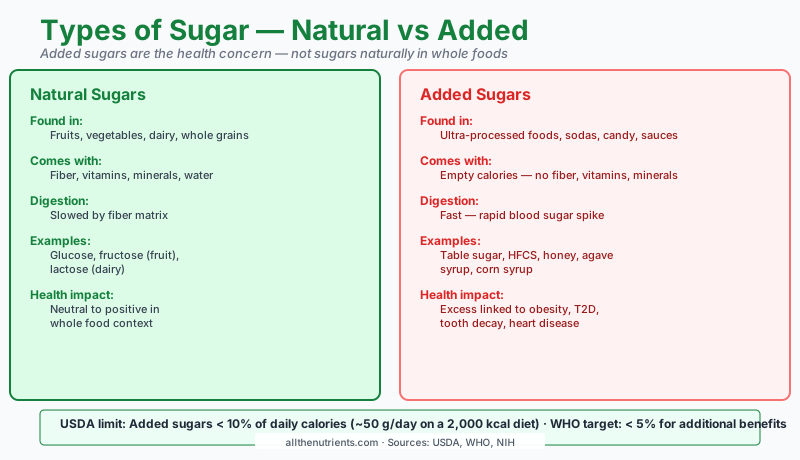
Total sugars is the collective measure of all simple carbohydrates in a food — both those occurring naturally (lactose in dairy, fructose in fruit, glucose in honey) and any sugars added during processing or cooking. Sugars provide 4 kilocalories per gram and are rapidly digested into glucose, which the body uses as an immediate energy source. There is no FDA Daily Value for total sugars, because the public health guidance focuses on limiting added sugars specifically (defined as caloric sweeteners added to foods during processing), with the recommendation that added sugars provide no more than 10% of total daily calories — approximately 50g on a 2,000 kcal diet.
Top Source
Sugars, granulated
99.8 g
What Does Sugar Do?
- Rapid energy availability — simple sugars are absorbed quickly into the bloodstream, providing an immediate glucose supply that is particularly useful during or after intense exercise to rapidly replenish muscle glycogen stores.
- Brain fuel — glucose is the brain's preferred fuel under normal metabolic conditions; blood glucose levels directly influence cognitive performance, reaction time, and mood in the short term.
- Natural sugars come packaged with nutrients — sugars naturally present in fruit, dairy, and vegetables are accompanied by vitamins, minerals, fibre, and phytonutrients that make them nutritionally very different from added sugars in processed foods.
- Palatability and food enjoyment — natural sweetness is one of the five basic taste sensations; sweet foods contribute to dietary variety, satisfaction, and cultural food traditions across all human societies.
Signs of Sugar Deficiency
Clinically meaningful "sugar deficiency" as an isolated nutrient concept is uncommon — the brain's glucose needs are met through carbohydrates of all types, including starches, which the body converts to glucose. However, acutely low blood glucose (hypoglycaemia) — below approximately 3.9 mmol/L — can occur in people with diabetes, during prolonged fasting, or with certain medical conditions, and produces characteristic symptoms that resolve rapidly with carbohydrate intake.
- Shakiness, trembling, and sweating — classic early signs of low blood glucose (hypoglycaemia)
- Rapid heartbeat and palpitations
- Anxiety, irritability, or sudden mood changes
- Pale skin and light-headedness
- Confusion, difficulty concentrating, or slurred speech in moderate hypoglycaemia
- Blurred vision and headache
- Hunger and intense cravings for sweet or starchy foods
- Loss of consciousness in severe untreated hypoglycaemia — a medical emergency
How to Get the Most from Sugar
Choose whole food sources of sugar over added sugars
Sugars in whole fruits, vegetables, and dairy are absorbed alongside fibre, water, and micronutrients that slow absorption and deliver nutritional value. Added sugars in sweets, soft drinks, and processed foods deliver calories without these companions, making it easy to consume excess energy without triggering adequate satiety signals.
Pair sugary foods with fibre, protein, or fat to slow glucose absorption
Consuming sugary foods alongside fibre-rich vegetables, protein, or fat blunts the post-meal glucose and insulin response. This reduces energy crashes after eating and improves overall blood glucose stability throughout the day.
Time higher-sugar foods around physical activity
Consuming sugars or higher-glycaemic carbohydrates in the 30–60 minutes before or immediately after intense exercise maximises their utility: before exercise they prime blood glucose, after exercise they accelerate glycogen resynthesis when muscle glucose uptake is high.
Common Sugar Questions
What is the difference between total sugars and added sugars?
Total sugars includes all simple carbohydrates in a food — both naturally occurring sugars (such as fructose in fruit, lactose in milk, and glucose in honey) and any sugars added during manufacturing or cooking (such as table sugar, high-fructose corn syrup, or concentrated fruit juice). Added sugars are the subset specifically added during processing; these are the ones public health guidelines recommend limiting. The FDA requires added sugars to be listed separately on the Nutrition Facts label in the US.
How much sugar should I eat per day?
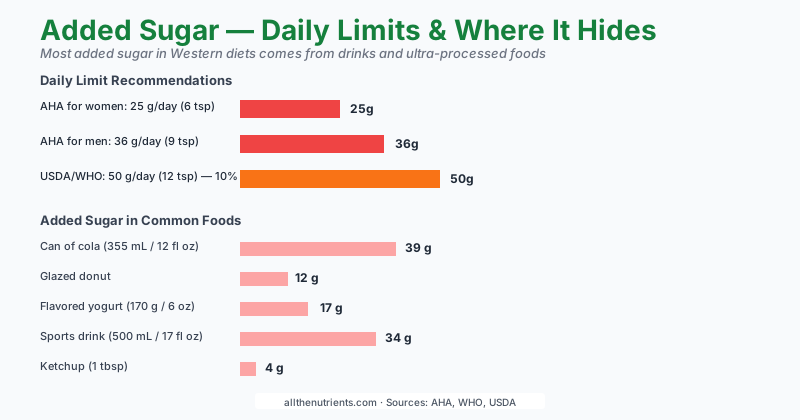
The FDA and the Dietary Guidelines for Americans recommend that added sugars account for no more than 10% of total daily calories — approximately 50g of added sugars per day on a 2,000 kcal diet. The World Health Organization recommends a stricter limit of less than 5% of calories (~25g) for additional health benefits. There is no specific limit on naturally occurring sugars in whole foods, as these come packaged with fibre, vitamins, and other nutrients.
What foods are highest in total sugars?
Refined sugar (table sugar, powdered sugar) is nearly 100% sugar by weight. Honey (~80g/100g), dried fruits (dates ~63g, dried cranberries ~72g with added sugar), jams and preserves, soft drinks (~10g/100ml), and breakfast cereals are among the highest sources of sugars. Naturally occurring sugars in whole fruits range from approximately 5–15g per 100g depending on the variety.
Is fruit bad for you because of its sugar content?
No — the sugars in whole fruit behave very differently from added sugars in processed foods. Whole fruit contains fibre, which slows sugar absorption and blunts the glycaemic response; it also provides vitamins, minerals, antioxidants, and polyphenols. Large-scale epidemiological studies consistently associate higher fruit consumption with lower risks of cardiovascular disease, type 2 diabetes, and all-cause mortality. Fruit juice is more comparable to added-sugar drinks because the fibre is removed or reduced.
Does eating sugar cause diabetes?
Type 2 diabetes is caused by insulin resistance and impaired beta-cell function, driven by a combination of genetic susceptibility, excess calorie intake, excess body fat (particularly visceral fat), physical inactivity, and other factors. Dietary sugar does not directly cause diabetes, but consistently consuming excess calories from added sugars — which contributes to weight gain and high visceral adiposity — is a risk factor for developing type 2 diabetes over time. Naturally occurring sugars in whole foods as part of a balanced diet are not associated with increased diabetes risk.
What is fructose and is it harmful?
Fructose is a monosaccharide (simple sugar) found naturally in fruit, honey, and some vegetables, and used as an industrial sweetener in the form of high-fructose corn syrup. Unlike glucose, fructose is metabolised primarily in the liver. Very high doses of isolated fructose — as seen in diets rich in sugar-sweetened beverages — are associated with increased liver fat, elevated triglycerides, and uric acid production. However, fructose from whole fruit at typical consumption levels is not associated with adverse metabolic effects in most studies, partly because the fibre and water in fruit moderate total fructose delivery.
Top Food Sources of Sugar
See all 50 →| # | Food | g / 100g |
|---|---|---|
| 1 | Sugars, granulated | 99.8 |
| 2 | Sugar, turbinado | 99.2 |
| 3 | Sugars, powdered | 97.8 |
| 4 | Beverages, Whiskey sour mix, powder | 97.3 |
| 5 | Beverages, lemonade-flavor drink, powder | 97.2 |
Sources & References
- FDA — Added Sugars on the New Nutrition Facts Label
- USDA Dietary Guidelines for Americans 2020–2025 — Added Sugars
- WHO — Guideline: Sugars intake for adults and children (2015)
- Muraki I et al. — Fruit consumption and risk of type 2 diabetes — BMJ (2013)
- USDA FoodData Central — Sugar content in foods