

Macronutrients
Carbohydrates
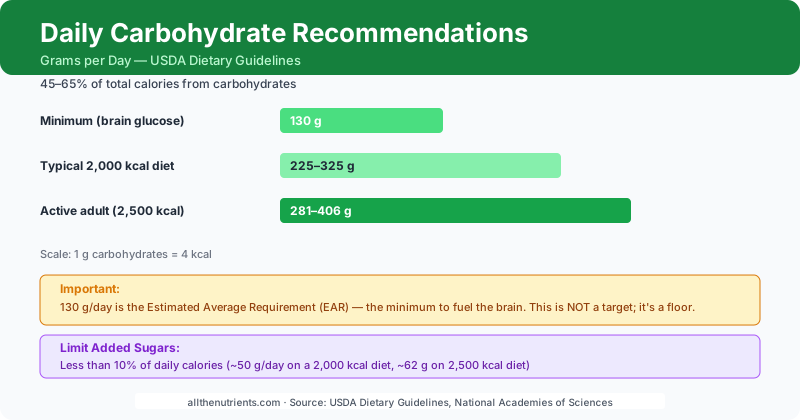
Carbohydrates are the body's preferred and most readily available energy source, providing 4 kcal/g. The USDA term "carbohydrate by difference" denotes total carbohydrate content calculated by subtracting water, protein, fat, ash, and sugars from 100 g of food — it therefore encompasses starches, dietary fibre, simple sugars, and other carbohydrate fractions. According to the USDA Dietary Guidelines 2020–2025, adults should aim for 45–65% of total calories from carbohydrates, equivalent to approximately 225–325 g (8–11.5 oz) per day on a 2,000 kcal diet, with a minimum of 130 g (4.6 oz) daily to meet the brain's baseline glucose requirement. The recommended intake varies by individual metabolic health, activity level, and life stage. See the top food sources of carbohydrates.
Daily Value
275 g
FDA 2020
Top Source
Sweeteners, tabletop, fructose, dry, powder
100 g
What Does Carbohydrates Do?
- Primary fuel for the brain and body — under normal metabolic conditions, the brain relies almost exclusively on glucose (derived from carbohydrates) for energy, consuming approximately 120 g of glucose per day; adequate carbohydrate intake directly supports cognitive function, concentration, focus, and emotional stability.
- High-intensity exercise performance — skeletal muscle preferentially oxidises glucose mobilised from muscle and liver glycogen during high-intensity aerobic and anaerobic activity; glycogen availability is a primary determinant of sustained athletic performance, training capacity, and post-exercise recovery.
- Glycogen storage and energetic flexibility — dietary carbohydrates are stored as glycogen in the liver (~100 g) and muscles (~400–500 g), providing an immediately mobilisable energy reserve between meals and during physical activity, enabling the body to sustain normal function without ketosis.
- Fibre and long-term metabolic health — whole grain and legume carbohydrates contain dietary fibre, which feeds beneficial gut bacteria, regulates bowel transit, promotes satiety, and is associated with reduced risk of cardiovascular disease, type 2 diabetes, colorectal cancer, and all-cause mortality in large prospective cohorts.
- Nutrient density and micronutrient delivery — whole food carbohydrate sources (legumes, intact whole grains, fruits, vegetables) are concentrated sources of vitamins, minerals (potassium, magnesium), polyphenols, and phytonutrients that are critical for metabolic health and not present in refined carbohydrates.
Signs of Carbohydrates Deficiency
Carbohydrate deficiency (intake below ~130 g/day) does not occur clinically in populations with adequate total calorie intake, because the body can synthesise glucose from amino acids (gluconeogenesis) and glycerol. However, severe carbohydrate restriction — particularly below 50 g/day — prompts the liver to produce ketone bodies from fat as an alternative brain fuel, the metabolic state known as ketosis. While ketosis has established clinical applications in drug-resistant epilepsy management and is the basis of ketogenic diets, very low carbohydrate intake may limit high-intensity exercise performance, substantially reduce dietary fibre intake (with downstream effects on gut microbiota, bowel health, and cardiovascular risk), and make it harder to meet vitamin and mineral needs concentrated in carbohydrate-rich whole plant foods.
- Low energy and persistent fatigue, particularly during moderate-to-high intensity physical activity or in the hours following meals
- Difficulty concentrating, "brain fog," confusion, and reduced mental clarity as blood glucose falls
- Irritability, anxiety, and mood swings between meals
- Premature exhaustion and poor exercise performance during sustained activity due to muscle glycogen depletion
- Increased hunger, intense cravings for carbohydrates or sugar, and difficulty maintaining satiety between meals
- Constipation and digestive discomfort if fibre intake drops alongside carbohydrate reduction
- Headache, nausea, dizziness, and shakiness during the initial adaptation to very low-carbohydrate eating (the "keto flu")
- Bad breath (acetone odour) from ketone body production on ketogenic or very-low-carbohydrate diets
How to Get the Most from Carbohydrates
Carbohydrate digestion begins in the mouth with amylase in saliva and continues in the small intestine, where pancreatic amylase breaks polysaccharides (starches) into disaccharides. Intestinal brush-border enzymes then cleave disaccharides (sucrose, maltose, lactose) and any remaining oligosaccharides into monosaccharides (glucose, fructose, galactose) for absorption. Glucose is absorbed via active transport and facilitated diffusion; fructose and galactose via facilitated diffusion. Dietary fibre, by definition, resists enzymatic breakdown and is fermented in the colon by beneficial bacteria into short-chain fatty acids (butyrate, propionate, acetate) that nourish the colonic epithelium and have systemic metabolic effects. Factors that slow carbohydrate digestion — including the presence of fat, protein, and insoluble fibre — reduce the glycaemic impact of a meal and promote steadier blood glucose and insulin responses.
Prioritise whole grain and legume carbohydrates over refined ones
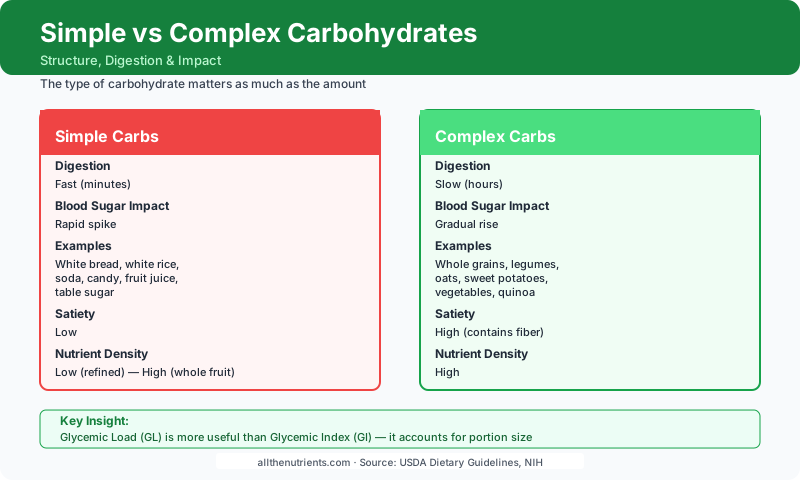
Whole grains, legumes, and starchy vegetables digest more slowly than refined flour, white rice, and sugar, producing a gentler blood glucose and insulin response. The intact fibre matrix slows starch hydrolysis, promotes greater satiety, delivers more sustained energy, and provides prebiotic fibre that refined carbohydrates lack. Look for intact grains (e.g., steel-cut oats, quinoa, millet, brown rice) rather than flour-based products.
Combine carbohydrates with protein, fat, or fibre to moderate blood glucose response
Consuming carbohydrates alongside protein, fat, or fibre slows gastric emptying, reduces the rate of carbohydrate digestion, and blunts post-meal blood glucose and insulin peaks. This strategy is particularly relevant for people managing blood glucose levels (pre-diabetics or type 2 diabetics), those seeking to minimise energy crashes after eating, and individuals trying to maintain stable satiety between meals.
Time carbohydrate intake around physical activity
Consuming carbohydrates 1–4 hours before exercise primes blood glucose and liver glycogen; consuming them within 30–60 minutes after intense exercise accelerates muscle glycogen resynthesis when glucose uptake is highest. Endurance athletes (>90 min/day intense training) may benefit from 6–10 g/kg body weight per day; recreational athletes from 3–5 g/kg; sedentary individuals benefit from distributing carbohydrate intake evenly across meals rather than concentrating it in one large eating occasion.
Include resistant starch and intact seeds to boost fibre
Resistant starch (found in cooled cooked potatoes, cooked-and-cooled rice, and partially ripe bananas) and intact seeds (flax, chia, hemp) resist digestion and feed beneficial gut bacteria similarly to dietary fibre. These sources deliver carbohydrates with a lower glycaemic impact and greater prebiotic benefit than refined carbohydrate sources.
Common Carbohydrates Questions
What are carbohydrates and what do they do?
Carbohydrates are organic compounds providing 4 kcal/g that are broken down into glucose, the primary fuel for the brain and muscles. They exist in three main forms: simple sugars (monosaccharides like glucose and fructose, and disaccharides like sucrose and lactose), starches (long-chain polysaccharides found in whole grains, legumes, and starchy vegetables), and dietary fibre (indigestible plant polysaccharides that feed beneficial gut bacteria). The body stores carbohydrates as glycogen in the liver (~100 g) and muscles (~400–500 g), providing an immediate energy reserve between meals and during physical activity.
How many carbohydrates should I eat per day?
The USDA Dietary Guidelines 2020–2025 recommend 45–65% of total calories from carbohydrates — equivalent to approximately 225–325 g (8–11.5 oz) per day on a 2,000 kcal diet. The Estimated Average Requirement (EAR) for carbohydrates is 130 g/day (based on the brain's baseline glucose requirement); this is not a target but a minimum. Individual needs vary substantially: endurance athletes often need 6–10 g/kg of body weight per day; people managing type 2 diabetes or prediabetes may benefit from a lower intake (e.g., 130–200 g/day) with emphasis on whole grains and legumes.
What is the difference between simple and complex carbohydrates?
Simple carbohydrates are short-chain sugars: monosaccharides (glucose, fructose, galactose — single molecules) and disaccharides (sucrose, lactose, maltose — two molecules). They digest quickly and raise blood glucose rapidly. Complex carbohydrates are long-chain polymers (starches and fibre) found in whole grains, legumes, and starchy vegetables. They digest more slowly, provide more sustained energy, and typically come packaged with fibre, vitamins, minerals, and polyphenols that refined simple carbohydrates lack. Whole fruit (simple carbohydrates + fibre) and legume starches (complex carbohydrates + fibre) both have favourable glycaemic and health effects.
Which carbohydrates are the healthiest?
The healthiest carbohydrate sources emphasise fibre, micronutrients, and a low glycaemic impact: whole grains (oats, barley, brown rice, quinoa, millet), legumes (lentils, chickpeas, beans), starchy vegetables (sweet potatoes, winter squash), and whole fruits (not juices). Whole grains contain the bran (fibre, vitamins, minerals) and germ (micronutrients); legumes are exceptional sources of plant protein, fibre, and resistant starch. Refined grains (white rice, white flour, refined cereals) have been stripped of the bran and germ, removing most fibre and micronutrients.
Do carbohydrates raise blood sugar?
Yes — all carbohydrates are digested to glucose, which enters the bloodstream. However, the rate and magnitude of blood glucose rise depend critically on the carbohydrate source, meal composition, and individual factors. Whole food sources with high fibre, fat, or protein (legumes, intact whole grains, fruits) produce a slower, smaller blood glucose rise (low glycaemic index or load) compared to refined carbohydrates. Pairing carbohydrates with protein, fat, or fibre in the same meal further slows glucose absorption and blunts the postprandial glucose peak — a key strategy for people managing blood glucose or seeking to minimise energy crashes.
Can a low-carb diet help with weight loss?
In the short term (3–6 months), low-carbohydrate diets can produce weight loss comparable to other calorie-restricted diets, partly due to initial water weight loss (glycogen and associated water are depleted) and reduced overall calorie intake from appetite suppression. However, meta-analyses and large randomised controlled trials over 1–2 years show no long-term advantage of low-carbohydrate diets over other approaches when total calories are matched. The critical factor for long-term weight loss is sustained caloric deficit and dietary adherence, not carbohydrate restriction per se.
What happens if you eat too few carbohydrates?
Below approximately 50–100 g/day, the body enters ketosis — producing ketone bodies from fat as an alternative fuel source. The brain adapts to use ketones, but exercise performance (particularly high-intensity work) typically declines initially due to reduced muscle glycogen availability. Very low intakes also often result in inadequate dietary fibre, which reduces gut microbial diversity, increases intestinal permeability, and may elevate cardiovascular disease risk over time. Vitamin and mineral intakes may be insufficient if low-carbohydrate diets do not include adequate varied vegetables and nuts/seeds.
Are carbohydrates fattening?
No — carbohydrates are not intrinsically fattening. Body fat accumulates from a caloric surplus regardless of macronutrient source. However, refined carbohydrates and added sugars promote overconsumption by producing rapid blood glucose spikes that trigger insulin release, followed by glucose crashes that trigger intense hunger and cravings — a cycle that often leads to excess calorie intake. Whole food carbohydrate sources — legumes, intact whole grains, fruits, starchy vegetables — are consistently associated with healthy weight maintenance and satiety in long-term prospective studies, likely due to their fibre content and slower digestion.
Top Food Sources of Carbohydrates
See all 50 →| # | Food | g / 100g | % DV |
|---|---|---|---|
| 1 | Sweeteners, tabletop, fructose, dry, powder | 100 | 36% |
| 2 | Sweetener, herbal extract powder from Stevia leaf | 100 | 36% |
| 3 | Sugars, granulated | 100.0 | 36% |
| 4 | Sugar, turbinado | 99.8 | 36% |
| 5 | Sugars, powdered | 99.8 | 36% |
Sources & References
- USDA Dietary Guidelines for Americans 2020–2025 — Carbohydrates
- Harvard T.H. Chan School of Public Health — Carbohydrates
- Mayo Clinic — Carbohydrates: How carbs fit into a healthy diet
- NIH MedlinePlus — Carbohydrates
- American Heart Association — Carbohydrates
- Ebbeling CB et al. — Effects of a low-carbohydrate diet on energy expenditure during weight loss maintenance — JAMA (2018)
- USDA FoodData Central — Carbohydrate content in foods