

Minerals
Iron
Iron is an essential mineral that the body uses to produce haemoglobin — the protein in red blood cells that carries oxygen to every tissue — and myoglobin, which stores oxygen in muscle. Beyond oxygen transport, iron is a cofactor for over 200 enzymes involved in energy metabolism, immune function, and cognitive development. Iron-deficiency anaemia affects approximately 1.2 billion people globally — the most common nutritional deficiency worldwide — making it critical to understand how to eat enough and absorb it well. See the top food sources of iron ranked by concentration.
Daily Value
18.0 mg
FDA 2020
Upper Limit
45.0 mg
per day
Top Source
Spices, thyme, dried
124 mg
What Does Iron Do?
- Oxygen transport and red blood cell function — haemoglobin in red blood cells carries oxygen from the lungs to every tissue; myoglobin stores oxygen in muscle. Together, these iron-containing proteins deliver approximately 70% of the body's iron and are critical for aerobic metabolism and physical endurance.
- Energy metabolism and ATP production — iron is a crucial cofactor in cytochrome enzymes embedded in the mitochondrial electron transport chain. Without adequate iron, cells cannot efficiently generate ATP from nutrients, causing fatigue and reduced physical capacity even before anaemia develops.
- Immune function and immune cell proliferation — iron is required for the proliferation and activation of lymphocytes (T cells and B cells) and neutrophils. Iron deficiency impairs both innate and adaptive immunity, increasing susceptibility to bacterial and viral infections.
- Cognitive development and neurological function — iron is essential for myelin synthesis (the insulation around nerve fibres), dopamine and serotonin production, and mitochondrial function in the brain. Childhood iron deficiency is associated with delayed cognitive development, lower IQ, and lasting learning impairments.
- Muscle function and athletic performance — myoglobin in muscle tissue stores oxygen and facilitates diffusion into mitochondria. Iron deficiency reduces the lactate threshold and exercise capacity; athletes, particularly endurance athletes, are at higher risk of deficiency due to increased iron losses.
Signs of Iron Deficiency
Iron-deficiency anaemia is the world's most common nutritional deficiency, affecting approximately 1.2 billion people globally according to WHO 2023 data. Deficiency progresses in three stages: iron depletion (depleted stores, normal haemoglobin and serum iron), iron-deficient erythropoiesis (depleted stores and low serum iron, but still-normal haemoglobin), and iron-deficiency anaemia (depleted stores, low serum iron, and low haemoglobin). At-risk groups include women of reproductive age (due to menstrual losses), pregnant women, infants and toddlers during periods of rapid growth, endurance athletes, and individuals with vegetarian or vegan diets or gastrointestinal conditions that impair absorption.
- Fatigue and general weakness — the most common and earliest sign, due to reduced oxygen delivery to tissues
- Pale skin, pale conjunctiva (inner eyelid), and pale nail beds — caused by reduced haemoglobin concentration
- Shortness of breath during normal exertion — due to reduced oxygen-carrying capacity
- Cold hands and feet — poor peripheral circulation from reduced cardiac output
- Brittle, spoon-shaped nails (koilonychia) — a sign of chronic iron deficiency
- Hair thinning or hair loss — iron is required for hair follicle growth
- Headaches and dizziness — from reduced cerebral oxygen delivery
- Pica: craving and consuming non-food items (ice, clay, dirt, starch) — an unusual but specific sign of iron deficiency
- Restless legs syndrome — involuntary leg movements at night, relieved by movement
- Impaired cognitive function and brain fog — affecting concentration and memory
- Frequent infections — due to impaired immune cell proliferation
Upper Limit: The Tolerable Upper Intake Level (UL) for iron is 45 mg/day for adults, covering all sources including food and supplements. Iron supplements are the leading cause of accidental poisoning in children under 6 — keep supplements tightly sealed and away from children. Chronic excess iron increases the risk of hemochromatosis, particularly in men and post-menopausal women. Never supplement without first testing serum ferritin to confirm deficiency.
Consider supplementing
Amazon affiliate link — we may earn a small commission at no extra cost to you.
How to Get the Most from Iron
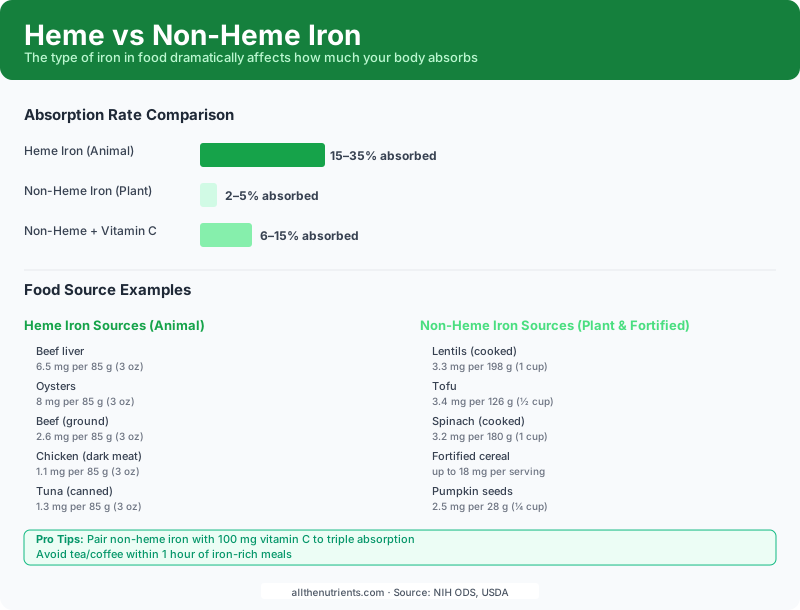
Iron absorption is one of the most tightly regulated processes in nutrition. In the duodenum and upper jejunum, heme iron (from animal foods) is absorbed intact through a specific transporter (HCP-1) at 15–35% efficiency. Non-heme iron (from plant and fortified foods) must be reduced from Fe³⁺ to Fe²⁺ by duodenal cytochrome B before uptake via DMT-1; its absorption ranges from 2–20% depending on the dietary context. The hormone hepcidin — produced by the liver in response to iron stores and inflammation — acts as the master regulator: it degrades ferroportin (the iron export channel) when stores are full, blocking further absorption. This is why iron absorption adapts: deficient individuals absorb up to 3× more from the same food than iron-replete individuals.
Pair plant iron with vitamin C
100 mg of vitamin C with a meal can triple non-heme iron absorption. A glass of 240 mL (8 fl oz) orange juice or half a bell pepper provides enough. Conversely, avoid tea, coffee, or calcium-rich dairy within 1 hour of iron-rich meals — polyphenols and calcium each reduce non-heme absorption by 30–60%.
Time iron supplements strategically
Iron supplements are best absorbed on an empty stomach, but cause more GI distress. Taking with a small amount of vitamin C minimises this. Interestingly, every-other-day supplementation — rather than daily — may improve total absorption because daily dosing raises hepcidin for ~24 hours, blunting the next dose (Moretti et al. 2015).
Use cast iron cookware for a natural boost
Cooking acidic foods (tomato sauce, curries) in cast iron can leach 2–7 mg of elemental iron per serving. While the form is non-heme iron and absorption varies, studies show it meaningfully raises iron status in deficient populations when used consistently.
GLP-1 medications and iron status
Medications like semaglutide (Ozempic/Wegovy) and tirzepatide suppress appetite and can reduce dietary variety, increasing the risk of iron deficiency. People using GLP-1 agonists long-term should monitor ferritin levels annually and ensure iron-rich foods remain part of their diet.
Common Iron Questions
What does iron do in the body?
Iron has four main functional forms in the body: functional iron (haemoglobin and myoglobin in red blood cells and muscle, comprising approximately 70% of body iron) carries oxygen to tissues and stores it in muscle; transport iron (transferrin) moves iron through the bloodstream; storage iron (ferritin and hemosiderin in the liver and spleen) maintains reserves; and enzyme-bound iron acts as a cofactor in over 200 enzymes, including those in energy metabolism (cytochrome c oxidase, ATP production) and DNA synthesis. Together, these forms enable oxygen delivery, aerobic energy production, immune cell proliferation, and genetic regulation.
What are the signs of iron deficiency?
Early signs include unexplained fatigue, lack of energy, and general weakness from reduced oxygen delivery to tissues. As deficiency progresses, symptoms include pale or sallow skin, shortness of breath or chest pain during activity, rapid or pounding heartbeat, pounding or "whooshing" sensation in the ears, and headaches—especially during physical exertion. Other signs are brittle or spoon-shaped nails (koilonychia), cold hands and feet, hair thinning, pica (craving ice, dirt, clay, or starch — a specific medical sign), and restless legs syndrome. Iron-deficiency anaemia affects approximately 1.2 billion people globally (WHO 2023), making it the world's most common nutritional deficiency.
How much iron do I need per day?
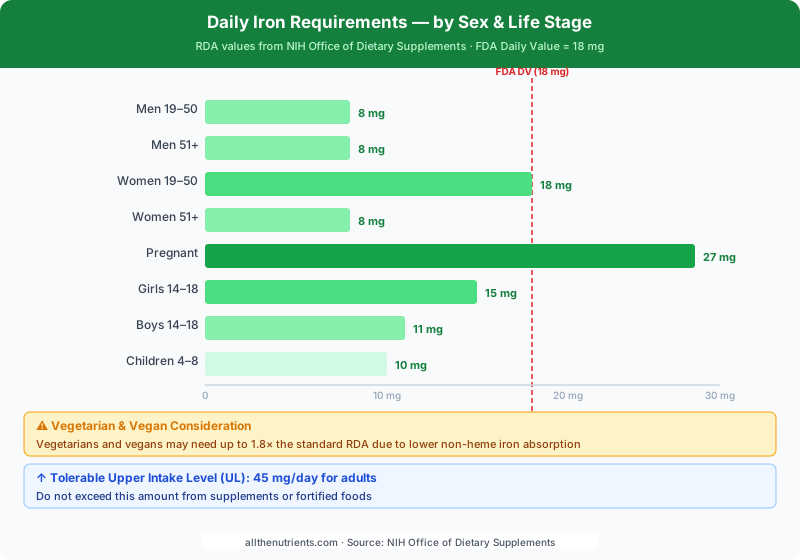
The FDA Daily Value is 18 mg/day. Recommended Daily Allowance (RDA) varies by life stage: adult men aged 19+ need 8 mg/day; women aged 19–50 need 18 mg/day (due to menstrual losses); women 51+ need 8 mg/day; pregnant women need 27 mg/day; adolescent girls aged 14–18 need 15 mg/day; and adolescent boys need 11 mg/day. The Tolerable Upper Intake Level (UL) is 45 mg/day for adults. Vegetarians and vegans may need approximately 1.8 times the standard RDA due to lower non-heme iron bioavailability. As a reference, 2 eggs per day provide only ~1.2 mg iron (7–15% of daily need) and are insufficient as a standalone source.
What foods are highest in iron?
The richest sources per 85 g (3 oz) cooked serving are clams (23 mg), oysters (8 mg), and beef liver (6.5 mg). Other excellent sources include fortified breakfast cereals (up to 18 mg per serving), dark chocolate (3.4 mg per 28 g / 1 oz), lentils (3.3 mg per 198 g / 1 cup cooked), tofu (3.4 mg per 126 g / ½ cup), and spinach (3.2 mg per 180 g / 1 cup cooked). Plant-based sources also include pumpkin seeds (2.5 mg per 28 g / 1 oz), dried apricots (2.7 mg per 100 g), and raisins (1.9 mg per 100 g). See the full ranked list for complete USDA FoodData Central data.
What is the difference between heme and non-heme iron?
Heme iron (from haemoglobin and myoglobin in animal foods: red meat, poultry, seafood) is 15–35% bioavailable and absorbed through a dedicated transporter (HCP-1) with minimal dietary influence. Non-heme iron (from plant foods, fortified foods, and eggs) is 2–20% bioavailable and its absorption is powerfully influenced by dietary context. Vitamin C (ascorbic acid) can triple non-heme absorption: consuming 100 mg (e.g., half a bell pepper or 240 mL / 8 fl oz orange juice) with a meal significantly enhances uptake. Enhancers include vitamin C and the "meat factor" (MFP, meat-peptide factor) from consuming meat with plant iron. Inhibitors include calcium (dairy, supplements), phytates (whole grains, legumes—partially reduced by soaking or fermenting), and tannins in tea and coffee.
Does coffee or tea reduce iron absorption?
Yes — tannins and polyphenols in coffee and black/green tea significantly inhibit non-heme iron absorption. A single cup of coffee or black tea consumed with a meal can reduce non-heme iron absorption by 60–70%. The inhibition is dose-dependent and timing-dependent: drinking coffee or tea 1 hour before or after an iron-rich meal reduces but doesn't eliminate the effect. Herbal teas (peppermint, chamomile) have much lower tannin content and pose less risk. People with low iron status or high plant-iron diets should be especially mindful of timing coffee/tea and iron-rich meals. This is also why iron supplements are best taken with water or vitamin C rather than with coffee or milk.
Which iron supplement is best?
Ferrous sulphate is the most studied, most affordable, and contains the highest elemental iron content (~20% by weight). Ferrous gluconate (12% elemental iron) is gentler on the gastrointestinal tract for people prone to nausea or constipation. Ferric forms (6% elemental iron or less) are less well absorbed and less preferred. Liquid forms are useful for children and older adults with swallowing difficulties. Take supplements on an empty stomach with water or a small amount of vitamin C for optimal absorption; if GI distress occurs, take with food. Importantly, every-other-day supplementation—rather than daily dosing—may improve total absorption because daily dosing raises hepcidin for approximately 24 hours, which blocks the next day's absorption (Moretti et al. 2015). Always check the label for elemental iron content, not total tablet weight.
Can too much iron be harmful?
Yes — the Tolerable Upper Intake Level is 45 mg/day from supplements for adults. Iron supplements are the leading cause of accidental fatal poisoning in children under 6 years old — store all supplements tightly sealed and out of reach. Chronic excess iron from long-term supplementation can cause hemochromatosis-like organ damage: joint pain, liver cirrhosis, heart problems, and diabetes. Hereditary hemochromatosis (HFE gene mutation) is a separate common genetic condition affecting iron metabolism. Acute iron toxicity causes nausea, vomiting, abdominal pain, and bloody stools. Always test serum ferritin before supplementing — haemoglobin alone can be normal while ferritin is depleted, and supplementing without confirmed deficiency is unnecessary and potentially harmful.
Top Food Sources of Iron
See all 50 →| # | Food | mg / 100g | % DV |
|---|---|---|---|
| 1 | Spices, thyme, dried | 124 | 687% |
| 2 | Spices, basil, dried | 89.8 | 499% |
| 3 | Spearmint, dried | 87.5 | 486% |
| 4 | Spices, marjoram, dried | 82.7 | 459% |
| 5 | Whale, beluga, meat, dried (Alaska Native) | 72.3 | 402% |
Sources & References
- NIH Office of Dietary Supplements — Iron Fact Sheet (Health Professional)
- WHO — Global anaemia burden and prevalence (2023)
- Cook JD et al. — Estimation of dietary iron bioavailability from food composition
- Moretti D et al. — Alternate-day compared with daily iron supplementation in women
- Hallberg L et al. — Inhibition of iron absorption by coffee and tea
- Mayo Clinic — Iron deficiency anaemia: Symptoms and causes
- USDA FoodData Central — Iron content in foods
- CDC — Hemoglobin and ferritin testing (Anemia data)