

Minerals
Zinc
Zinc is an essential mineral that the body uses as a cofactor for over 300 enzymes and as a structural component in approximately 2,000 transcription factors that regulate gene expression. Beyond enzyme catalysis and gene regulation, zinc plays critical roles in immune function (T-cell development, thymus function, natural killer cells), wound healing (cell division and collagen synthesis), protein synthesis, taste and smell perception (zinc-dependent taste receptor proteins), male reproductive health (testosterone synthesis and sperm production), and vision (retinal enzyme component). Zinc deficiency, affecting approximately 17% of the global population according to WHO, is particularly common in plant-based diets due to bioavailability challenges from phytates.
Daily Value
11.0 mg
FDA 2020
Upper Limit
40.0 mg
per day
Top Source
Mollusks, oyster, eastern, canned
90.9 mg
What Does Zinc Do?
- Immune function and infection resistance — zinc is absolutely required for thymus gland development, T-lymphocyte maturation, and natural killer (NK) cell function. Severe zinc deficiency reduces circulating T cells by 40–70% and dramatically impairs both innate and adaptive immune responses. Zinc is sometimes called the "gatekeeper of immunity" because even mild deficiency compromises defence against bacteria, viruses, and fungi.
- Wound healing and tissue repair — zinc regulates all three phases of wound healing: inflammation (zinc-dependent protease regulation), proliferation (cell division and collagen deposition), and remodelling (matrix formation). Zinc is required for fibroblast migration and proliferation; deficiency is a hallmark sign of slow-healing wounds and chronic ulcers.
- Protein synthesis and cell division — zinc is a cofactor for RNA polymerase and DNA polymerase, making it essential for rapid cell division and protein synthesis. This explains why growth is stunted in deficiency and why athletes and rapidly growing children are at higher risk.
- Reproductive health and testosterone — zinc is concentrated in the testes and is required for testosterone biosynthesis. Deficiency reduces testosterone levels and impairs sperm motility and morphology. Supplementation in deficient men restores testosterone; in replete men, more zinc provides no additional benefit.
- Taste, smell, and appetite regulation — zinc is a component of taste receptor proteins and zinc-dependent enzymes required for taste bud function. Deficiency causes metallic taste, anosmia (loss of smell), and appetite loss, which paradoxically worsens deficiency by reducing food intake.
- Eye health and night vision — zinc is a component of retinal dehydrogenase, an enzyme essential for the visual cycle. Deficiency impairs dark adaptation and can contribute to age-related macular degeneration (AMD). Zinc supplementation in high-risk populations reduces AMD progression risk.
Signs of Zinc Deficiency
Zinc deficiency, known as hypozincemia, affects approximately 17% of the global population according to WHO, with higher prevalence in low-income countries, plant-based populations, and individuals with malabsorption or chronic diseases. Deficiency progresses insidiously: mild deficiency may cause no obvious symptoms but impairs immune function and growth; moderate-to-severe deficiency (serum zinc <10.7 mcmol/L) produces obvious clinical signs including dermatitis, diarrhoea, alopecia, and immune dysfunction. At-risk groups include vegans and vegetarians (due to plant phytates inhibiting absorption), older adults with reduced intake, people on total parenteral nutrition without zinc supplementation, those with chronic diarrhoea or malabsorption (Crohn's disease, celiac disease), and individuals on long-term diuretics.
- Slow-healing wounds and chronic skin ulcers — the hallmark sign of zinc deficiency; wounds take weeks or months longer to heal
- Hair loss and alopecia — zinc is required for hair follicle growth and differentiation
- Acne and eczematous skin lesions, particularly around eyes, nose, mouth, and genital areas (dermatitis)
- Poor immunity and frequent infections — bacterial, viral, and fungal infections more common
- Loss or distortion of taste (hypogeusia or dysgeusia) and smell (anosmia) — metallic or abnormal taste
- Reduced appetite and weight loss — partially due to taste/smell loss
- Growth retardation in children and adolescents — stunted growth and delayed sexual maturation
- Male infertility and sexual dysfunction — low testosterone, poor sperm motility
- Night blindness and impaired dark adaptation — zinc is part of retinal enzyme
- White spots on fingernails (leukonychia) — associated with mild chronic deficiency
- Diarrhoea and gastrointestinal dysfunction
- Mental fog and impaired concentration — zinc required for neurological function
Upper Limit: The Tolerable Upper Intake Level (UL) for zinc is 40 mg/day from all sources (food and supplements). Long-term supplementation above this level causes copper deficiency with neurological consequences. If supplementing above RDA (11 mg/day for men, 8 mg/day for women), monitor for copper depletion and consider concurrent copper supplementation (2–4 mg/day). Zinc lozenges for cold duration reduction (75+ mg/day) should be used for short periods only (under 7 days).
Consider supplementing
Amazon affiliate link — we may earn a small commission at no extra cost to you.
How to Get the Most from Zinc
Zinc absorption occurs primarily in the duodenum and proximal jejunum at 15–40% efficiency depending on dietary context. The amount absorbed is tightly regulated by the body: in deficiency, absorption increases to ~40%; in repletion, absorption decreases to ~15%. Dietary inhibitors (phytates in grains and legumes, calcium, and iron supplements) can reduce absorption by up to 50–60%; conversely, animal protein (particularly from meat) and fermentation (which breaks down phytates) enhance absorption. A critical point: supplemental zinc above the RDA can impair copper absorption, causing copper deficiency with neurological consequences.
Pair plant zinc with vitamin C or animal protein to boost absorption
Plant-based zinc (non-heme) is less bioavailable than animal zinc (heme). Consuming legumes or whole grains with vitamin C (citrus, berries, peppers) or small amounts of meat enhances absorption. Conversely, consuming these foods with tea, coffee, or calcium supplements within the same meal reduces zinc absorption.
Soak and ferment grains and legumes to reduce phytates
Phytates in whole grains, legumes, and seeds bind zinc and inhibit absorption. Soaking overnight or fermenting (as in sourdough) reduces phytate content by 30–50%, making zinc more available. Traditional food preparation methods evolved to address this.
If supplementing above RDA, monitor copper status and balance
Long-term zinc supplementation >40 mg/day competes with copper for absorption and can cause copper deficiency, leading to neurological problems, anaemia, and immune impairment. If taking therapeutic zinc long-term, include a copper supplement (2–4 mg/day) and monitor serum copper levels. Never supplement >40 mg/day without medical supervision.
Vegetarians need approximately 50% more zinc
Due to phytate inhibition in plant foods, vegetarians and vegans require roughly 1.5× the RDA for zinc. A vegan man needing 11 mg should aim for 16–17 mg from food; a vegetarian woman needing 8 mg should aim for 12–13 mg. Supplement if meeting this target proves difficult.
Common Zinc Questions
What does zinc do in the body?
Zinc serves three main roles: (1) enzymatic cofactor — zinc is required by over 300 enzymes involved in carbohydrate metabolism, protein synthesis, nucleic acid metabolism, and fatty acid synthesis; (2) structural role — zinc stabilises approximately 2,000 transcription factors that regulate gene expression across the genome; (3) signalling molecule — zinc participates in cell signalling, immune activation, and apoptosis. Functionally, zinc is essential for immune function (T-cell development, thymus gland maturation, natural killer cell activity), wound healing (cell proliferation and collagen synthesis), taste and smell perception, male reproductive health (testosterone biosynthesis, sperm production), hair and skin integrity (keratin synthesis), and vision (retinal enzyme component).
What are the signs of zinc deficiency?
Slow-healing wounds are the hallmark and earliest sign, appearing weeks to months before other symptoms. Classic signs include hair loss or thinning, acne and eczematous skin lesions (particularly around the eyes, nose, mouth, and genitals), loss or distortion of taste and smell (sometimes metallic taste), reduced appetite and weight loss, frequent infections (bacterial, viral, fungal), growth retardation in children, male infertility and sexual dysfunction, night blindness, and white spots on fingernails. In severe, prolonged deficiency, mental fog, depression, and immune collapse can occur. At-risk groups include vegans/vegetarians, older adults, those with chronic diarrhoea or malabsorption disorders, and individuals on long-term diuretics or immunosuppressive therapy.
How much zinc do I need per day?
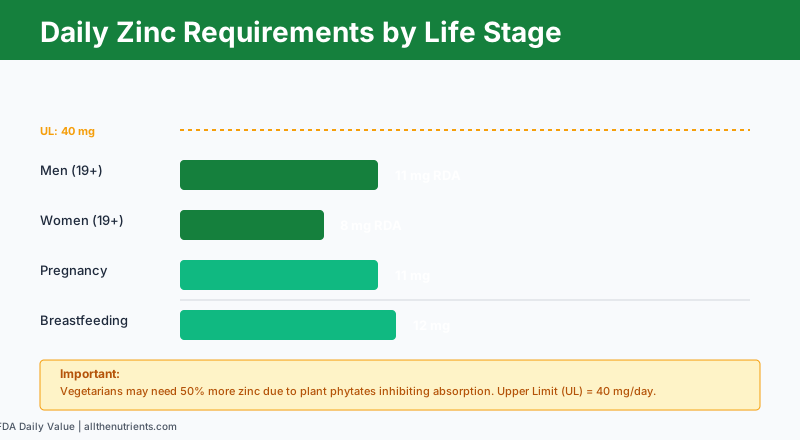
The FDA Daily Value is 11 mg. The Recommended Dietary Allowance (RDA) is 11 mg/day for adult men, 8 mg/day for adult women, 11 mg/day for pregnant women, and 12 mg/day for breastfeeding women. The Tolerable Upper Intake Level (UL) is 40 mg/day for adults. Vegetarians and vegans require approximately 50% more — roughly 16–17 mg/day for men and 12–13 mg/day for women — due to phytate inhibition of plant-based zinc. Long-term supplementation above 40 mg/day is contraindicated without medical supervision because it depletes copper, causing neurological and immune problems. High-dose zinc (75+ mg/day as lozenges) for cold duration reduction should only be used for short periods (under 7 days).
What foods are highest in zinc?
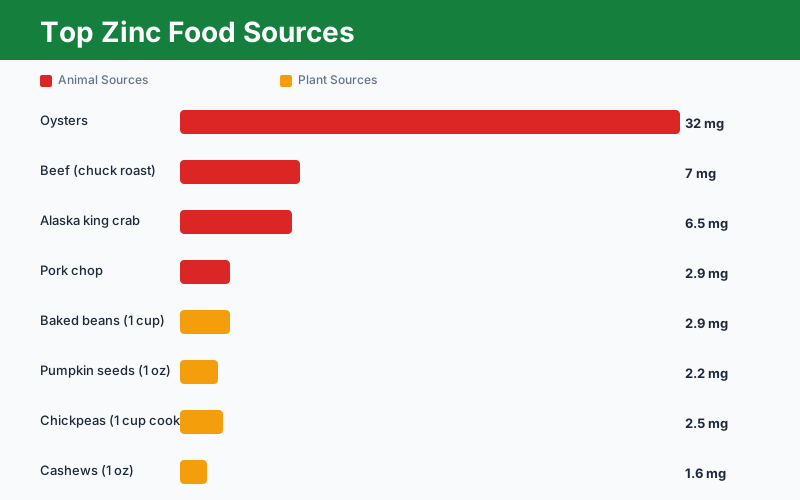
Oysters are by far the richest source: 32 mg per 85 g (3 oz) cooked serving — far exceeding any other food. Other excellent animal sources include beef chuck roast (7 mg per 85 g), Alaska king crab (6.5 mg per 85 g), pork chop (2.9 mg per 85 g), and eggs. Plant sources are modest: baked beans (2.9 mg per 172 g / 1 cup cooked), chickpeas (2.5 mg per 164 g / 1 cup cooked), pumpkin seeds (2.2 mg per 28 g / 1 oz), and cashews (1.6 mg per 28 g / 1 oz). Because plant zinc is less bioavailable (inhibited by phytates), vegetarians and vegans should consume larger quantities or combine with vitamin C to enhance absorption.
Does zinc boost immune function and reduce cold duration?
Yes, but with important caveats: zinc is absolutely essential for baseline immune function, and severe deficiency dramatically impairs immunity. However, supplementation above the RDA in zinc-replete individuals does NOT improve baseline immunity. For cold duration reduction, zinc lozenges (not tablets or capsules) containing acetate or gluconate formulations at 75+ mg/day, started within 24 hours of symptom onset, reduce cold duration by approximately 33% (Cochrane 2015). Lozenges work because they dissolve slowly in the mouth/throat, reaching mucous membranes where the virus replicates. Oral supplements and food do not provide this local effect. Short-term use (1 week) is safe; long-term daily lozenges >40 mg/day risk copper deficiency.
Does zinc help with skin and acne?
Yes, particularly if deficient: zinc regulates sebum production, has anti-inflammatory properties, and is required for skin barrier integrity and wound healing. Topical zinc oxide accelerates wound closure and reduces inflammation. For acne, zinc acetate and erythromycin combination therapy is standard in many countries and supported by clinical trials. Oral zinc supplementation (15–30 mg/day) modestly improves acne in some studies, particularly in deficient or low-normal individuals. However, the effect is moderate, and high-dose supplementation provides no additional benefit and risks copper deficiency. If considering supplementation, first test zinc levels.
Does zinc improve hair growth and prevent hair loss?
Only in deficiency: zinc is required for hair follicle growth and differentiation, and deficiency causes alopecia. In deficient individuals, zinc repletion restores hair growth. However, in people with normal zinc status, supplementation does not improve hair growth or prevent androgenetic alopecia (male/female pattern baldness). Hair loss is multifactorial — common causes include iron deficiency (check ferritin), vitamin D deficiency, thyroid dysfunction, and genetic factors. Before supplementing zinc for hair loss, rule out these other deficiencies and confirm low zinc status via serum zinc testing.
Can too much zinc be harmful?
Yes — the Tolerable Upper Intake Level (UL) is 40 mg/day. Acute excess (single very high doses) causes nausea, vomiting, loss of appetite, and abdominal cramps. Chronic excess (long-term supplementation >50 mg/day) causes copper deficiency — zinc competes with copper for intestinal absorption — leading to neurological symptoms (ataxia, peripheral neuropathy), microcytic anaemia, immune impairment, and impaired wound healing (ironically, despite being on zinc). The copper-to-zinc ratio should remain approximately 10:1. People taking therapeutic zinc long-term (>40 mg/day) must also take a copper supplement (2–4 mg/day) and have copper levels monitored. Zinc from food sources alone very rarely reaches toxic levels.
Top Food Sources of Zinc
See all 50 →| # | Food | mg / 100g | % DV |
|---|---|---|---|
| 1 | Mollusks, oyster, eastern, canned | 90.9 | 827% |
| 2 | Mollusks, oyster, eastern, cooked, breaded and fried | 87.1 | 792% |
| 3 | Mollusks, oyster, eastern, wild, cooked, moist heat | 78.6 | 715% |
| 4 | Cereals ready-to-eat, RALSTON Enriched Wheat Bran flakes | 64.3 | 585% |
| 5 | Mollusks, oyster, eastern, wild, cooked, dry heat | 61.0 | 555% |
Sources & References
- NIH Office of Dietary Supplements — Zinc Fact Sheet (Health Professional)
- Hemilä H — Zinc lozenges and the common cold: a meta-analysis revisited (J R Soc Med. 2011)
- Prasad AS — Zinc in human health: effect of zinc on immune cells (Mol Med. 2008)
- Fraker PJ et al. — The dynamic link between the integrity of the immune system and zinc status (J Nutr. 1987)
- Mayo Clinic — Zinc Supplement (Health Information)
- USDA FoodData Central — Zinc content in foods
- WHO — Global nutrition status and micronutrient deficiencies